> ## Documentation Index
> Fetch the complete documentation index at: https://docs.fentufsm.com/llms.txt
> Use this file to discover all available pages before exploring further.
# Connect Wizard
> Step-by-step wizard for quickly setting up new integrations in Fentu Connect
## Overview
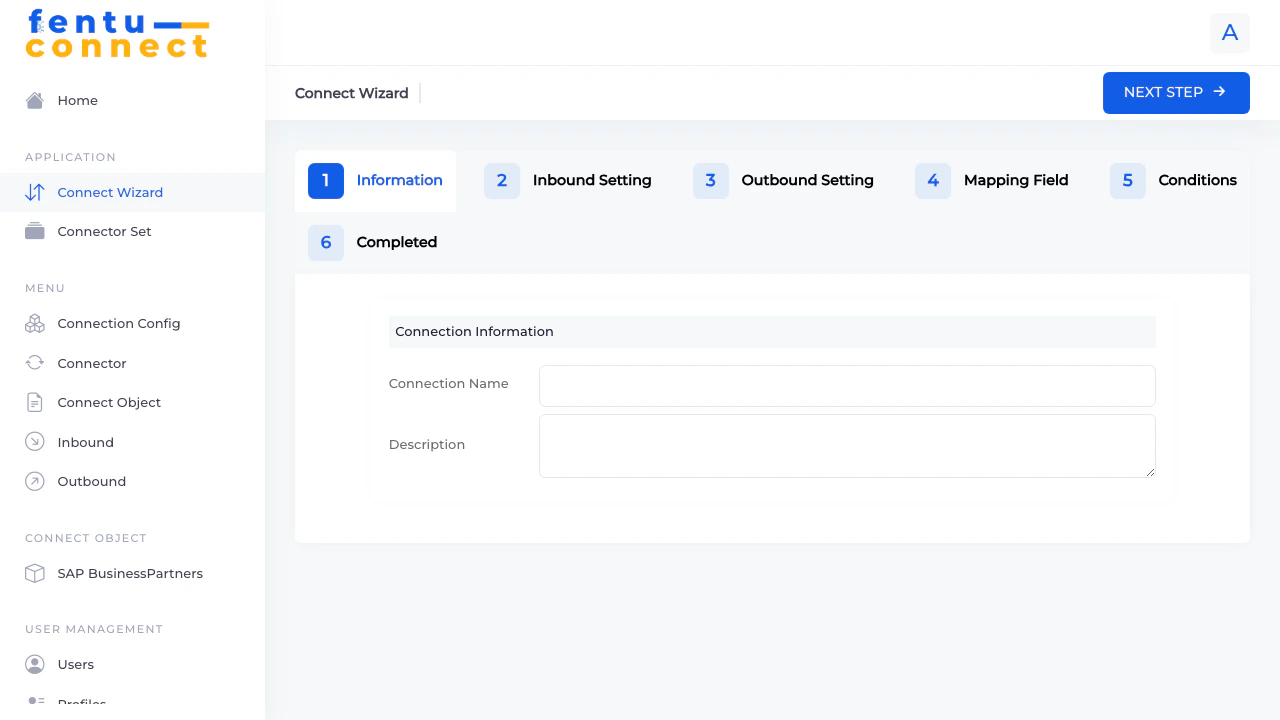
The Connect Wizard provides a guided, step-by-step process for creating new integrations between Fentu FSM and external systems. Instead of configuring each component separately, the wizard walks you through all the necessary steps in one flow.
 ## The 6-Step Process
Enter basic details about the connection including name and description
Configure the inbound connection type and activation status
Configure the outbound connection type and activation status
Define how fields map between systems
Set up any conditions or filters for data synchronization
Review and finish the wizard
***
## Step 1: Information
The first step captures the basic identification information for your new connection.
| Field | Description |
| ------------------- | ----------------------------------------------------------------------------------------------------- |
| **Connection Name** | A unique, descriptive name for this integration (e.g., "SAP Customer Sync", "Salesforce Lead Import") |
| **Description** | Optional notes explaining the purpose of this connection or any special configuration details |
Use clear, descriptive names that indicate both the system and data type being synchronized. This makes it easier to identify connections later.
***
## Step 2: Inbound Setting
## The 6-Step Process
Enter basic details about the connection including name and description
Configure the inbound connection type and activation status
Configure the outbound connection type and activation status
Define how fields map between systems
Set up any conditions or filters for data synchronization
Review and finish the wizard
***
## Step 1: Information
The first step captures the basic identification information for your new connection.
| Field | Description |
| ------------------- | ----------------------------------------------------------------------------------------------------- |
| **Connection Name** | A unique, descriptive name for this integration (e.g., "SAP Customer Sync", "Salesforce Lead Import") |
| **Description** | Optional notes explaining the purpose of this connection or any special configuration details |
Use clear, descriptive names that indicate both the system and data type being synchronized. This makes it easier to identify connections later.
***
## Step 2: Inbound Setting
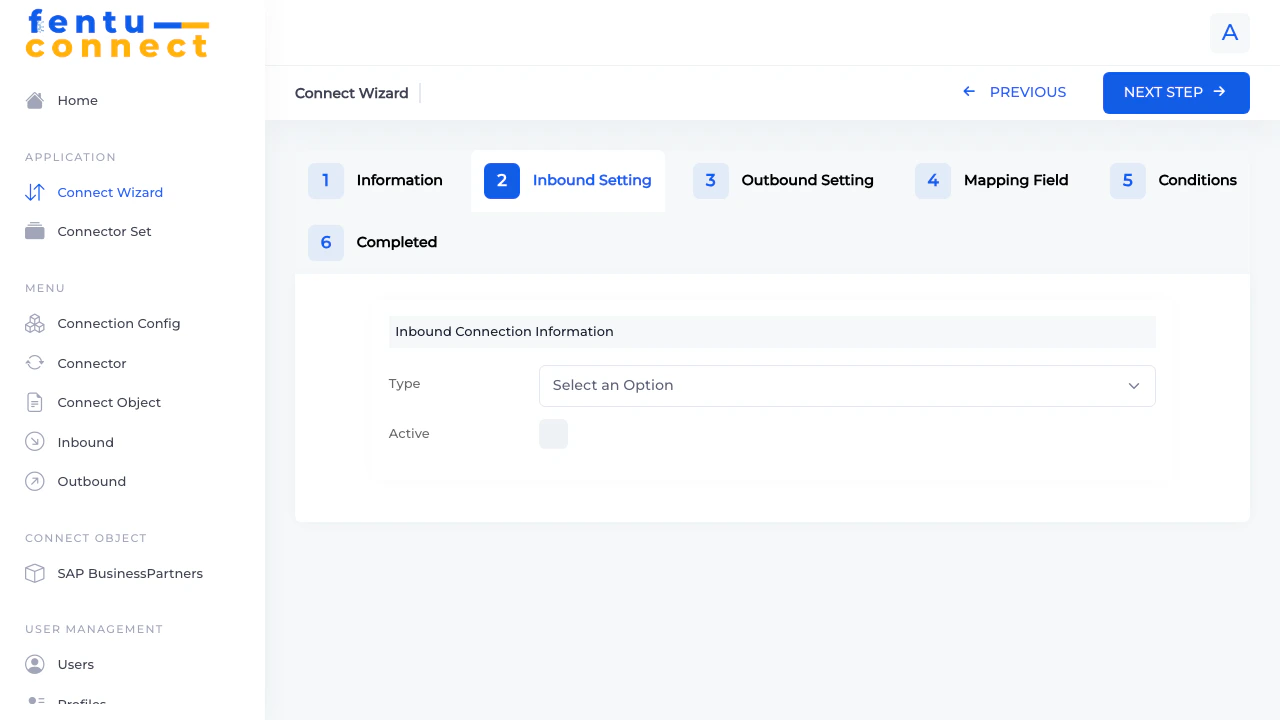 Configure the inbound connection which pulls data from an external system INTO Fentu FSM.
| Field | Description |
| ---------- | -------------------------------------------------- |
| **Type** | Select the integration type from the dropdown |
| **Active** | Checkbox to enable/disable this inbound connection |
### Available Integration Types
SAP Business One ERP system
Another Fentu FSM instance
Salesforce CRM
Acumatica Cloud ERP
Shopware e-commerce
ABAS ERP system
HR management system
Window manufacturing software
Internal system connections
Shopware via JSON blob
Do not activate a connection until you have verified all configuration settings. Activating an incorrectly configured connection may result in data errors.
***
## Step 3: Outbound Setting
Configure the inbound connection which pulls data from an external system INTO Fentu FSM.
| Field | Description |
| ---------- | -------------------------------------------------- |
| **Type** | Select the integration type from the dropdown |
| **Active** | Checkbox to enable/disable this inbound connection |
### Available Integration Types
SAP Business One ERP system
Another Fentu FSM instance
Salesforce CRM
Acumatica Cloud ERP
Shopware e-commerce
ABAS ERP system
HR management system
Window manufacturing software
Internal system connections
Shopware via JSON blob
Do not activate a connection until you have verified all configuration settings. Activating an incorrectly configured connection may result in data errors.
***
## Step 3: Outbound Setting
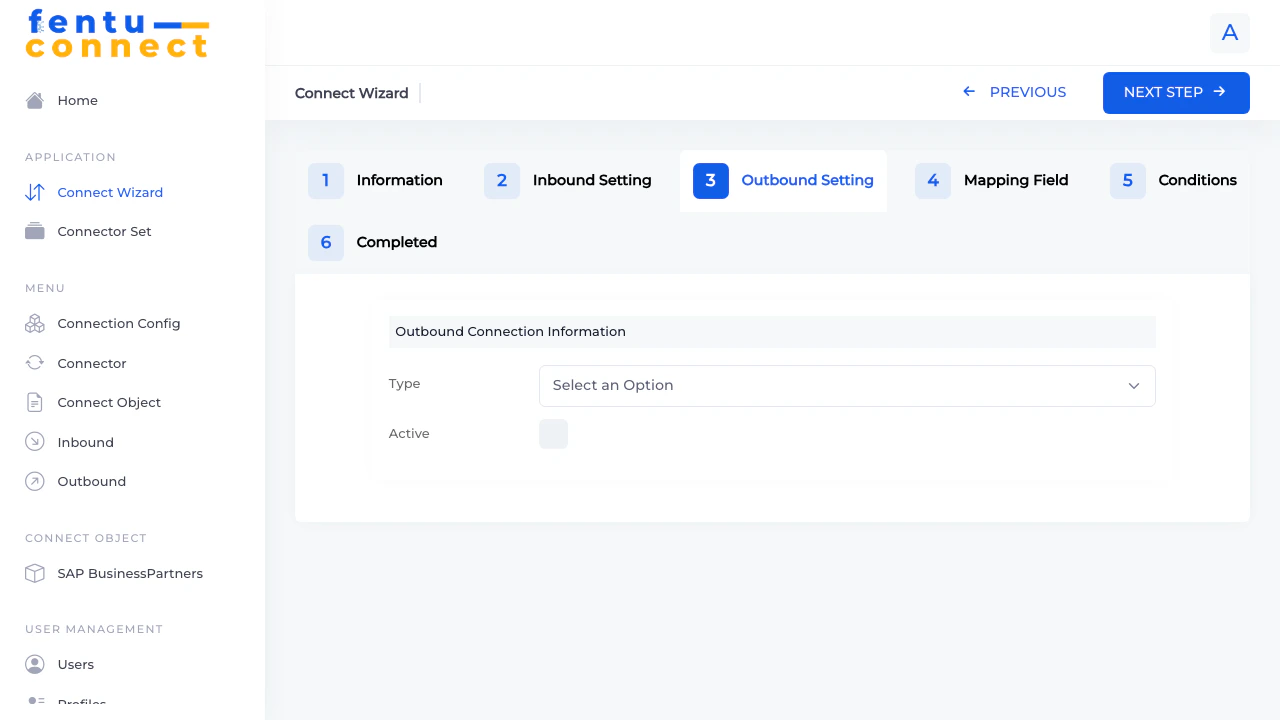 Configure the outbound connection which pushes data FROM Fentu FSM to an external system.
| Field | Description |
| ---------- | ----------------------------------------------------------------------- |
| **Type** | Select the integration type from the dropdown (same options as Inbound) |
| **Active** | Checkbox to enable/disable this outbound connection |
You can configure just an inbound connection, just an outbound connection, or both depending on your integration requirements.
***
## Step 4: Mapping Field
Configure the outbound connection which pushes data FROM Fentu FSM to an external system.
| Field | Description |
| ---------- | ----------------------------------------------------------------------- |
| **Type** | Select the integration type from the dropdown (same options as Inbound) |
| **Active** | Checkbox to enable/disable this outbound connection |
You can configure just an inbound connection, just an outbound connection, or both depending on your integration requirements.
***
## Step 4: Mapping Field
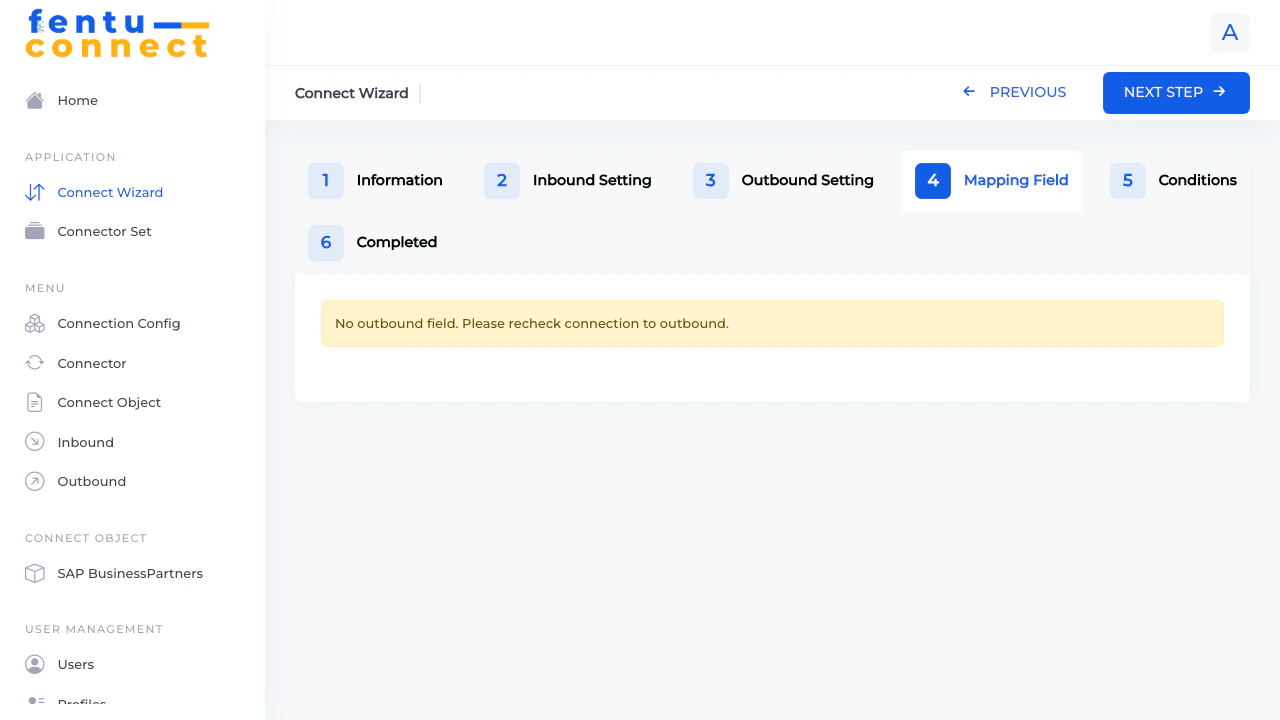 Define how fields from the source system map to fields in the destination system. This step allows you to specify which data goes where.
For detailed information about field mapping including formula syntax, see the [Field Mapping Guide](/fentu-connect/connection-config) and [Formula Reference](/fentu-connect/formula-reference).
***
## Step 5: Conditions
Define how fields from the source system map to fields in the destination system. This step allows you to specify which data goes where.
For detailed information about field mapping including formula syntax, see the [Field Mapping Guide](/fentu-connect/connection-config) and [Formula Reference](/fentu-connect/formula-reference).
***
## Step 5: Conditions
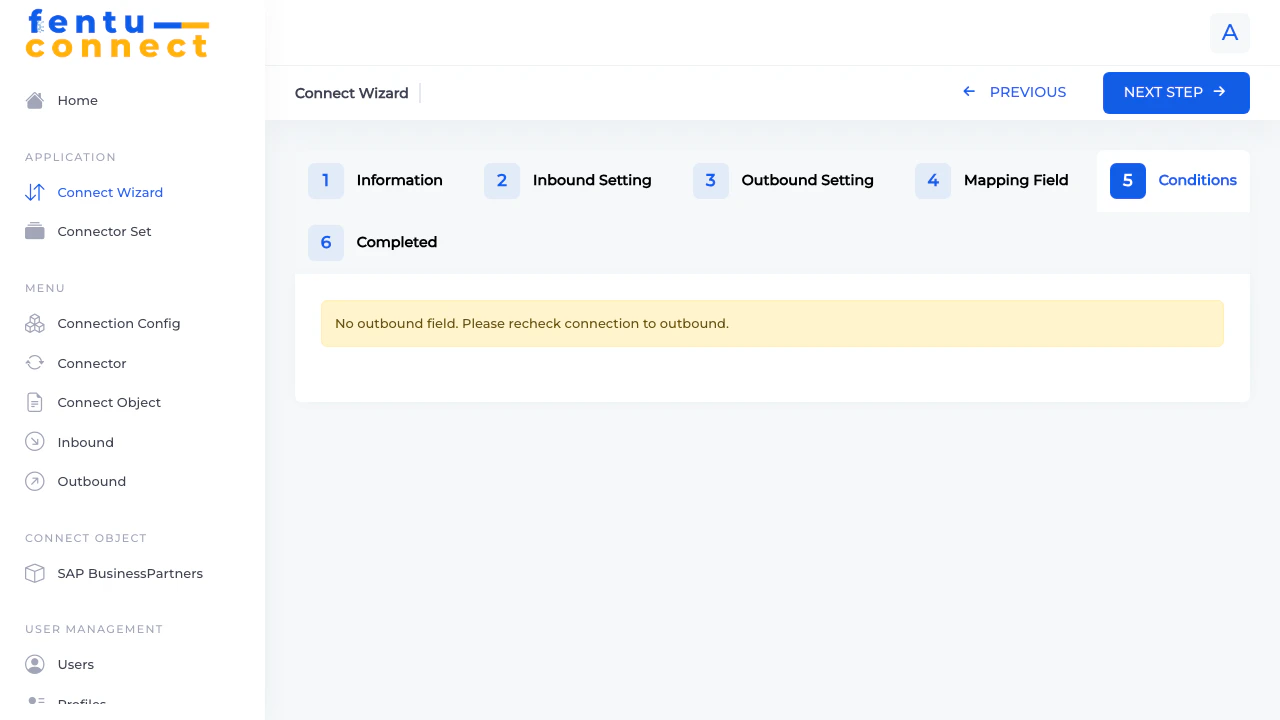 Set up any conditions that control when data should be synchronized. Conditions act as filters to ensure only the right data is transferred.
***
## Step 6: Completed
Set up any conditions that control when data should be synchronized. Conditions act as filters to ensure only the right data is transferred.
***
## Step 6: Completed
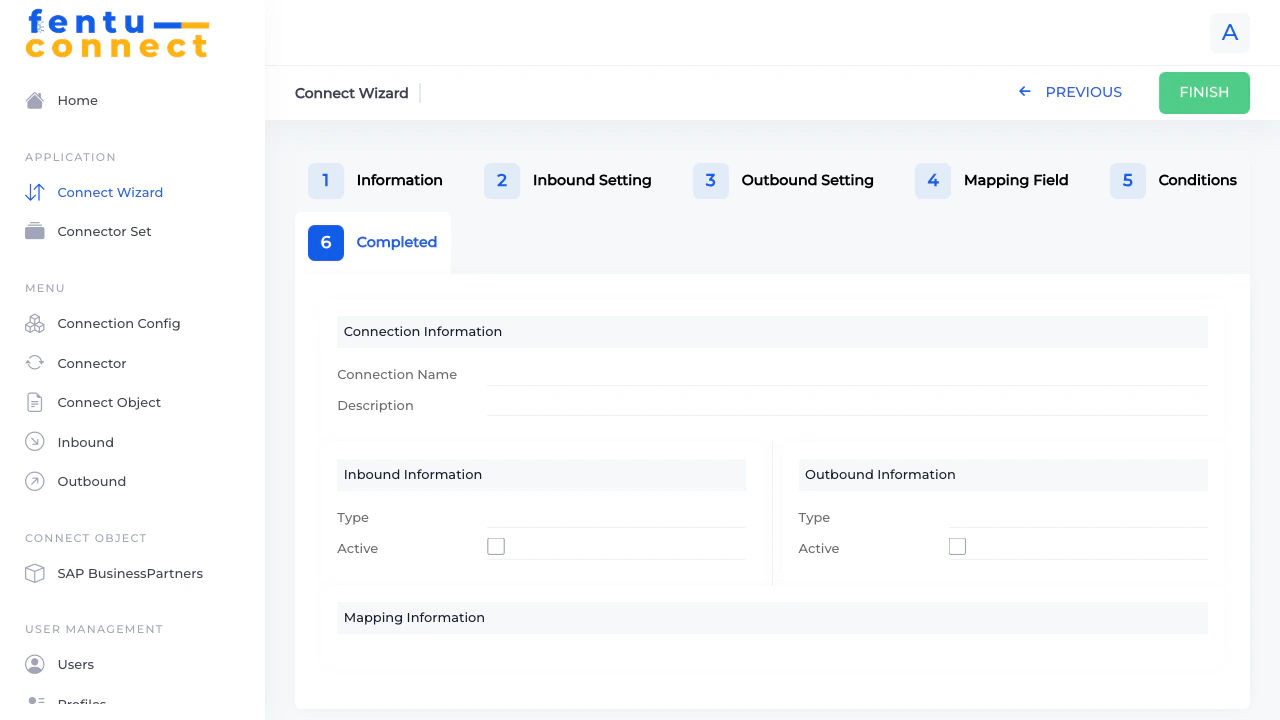 Review your configuration and click **Finish** to create the connection. The wizard will create:
* A new Connector with your specified settings
* Inbound connection (if configured)
* Outbound connection (if configured)
* Field mappings
***
## Tips and Best Practices
When setting up bidirectional sync, it's often best to configure and test the inbound connection first. This allows you to verify data is being received correctly before configuring outbound data push.
Leave connections inactive initially. Use the test features to verify your configuration before enabling live data synchronization.
Name your connections clearly to indicate the system, direction, and data type. For example: "SAP B1 - Inbound - Customers" or "SFDC - Outbound - Work Orders"
Use the description field to document any special mapping logic or business rules applied to this connection.
***
## Common Questions
Yes, you can configure just one direction. Simply leave the other direction's type as "Select an Option" and don't activate it.
The wizard will create a connection with whatever settings you've provided. You can edit the connection later to complete the configuration.
Yes, all connections created through the wizard can be edited individually through the Connector, Inbound, or Outbound menu items.
Navigate to the Connector page, find your connection, and use the Delete button. Note that this may also affect related inbound/outbound configurations.
***
## Related Documentation
Configure connection credentials before using the wizard
Define the data structures for your integrations
Detailed guide for inbound data configuration
Detailed guide for outbound data configuration
Review your configuration and click **Finish** to create the connection. The wizard will create:
* A new Connector with your specified settings
* Inbound connection (if configured)
* Outbound connection (if configured)
* Field mappings
***
## Tips and Best Practices
When setting up bidirectional sync, it's often best to configure and test the inbound connection first. This allows you to verify data is being received correctly before configuring outbound data push.
Leave connections inactive initially. Use the test features to verify your configuration before enabling live data synchronization.
Name your connections clearly to indicate the system, direction, and data type. For example: "SAP B1 - Inbound - Customers" or "SFDC - Outbound - Work Orders"
Use the description field to document any special mapping logic or business rules applied to this connection.
***
## Common Questions
Yes, you can configure just one direction. Simply leave the other direction's type as "Select an Option" and don't activate it.
The wizard will create a connection with whatever settings you've provided. You can edit the connection later to complete the configuration.
Yes, all connections created through the wizard can be edited individually through the Connector, Inbound, or Outbound menu items.
Navigate to the Connector page, find your connection, and use the Delete button. Note that this may also affect related inbound/outbound configurations.
***
## Related Documentation
Configure connection credentials before using the wizard
Define the data structures for your integrations
Detailed guide for inbound data configuration
Detailed guide for outbound data configuration