
Overview
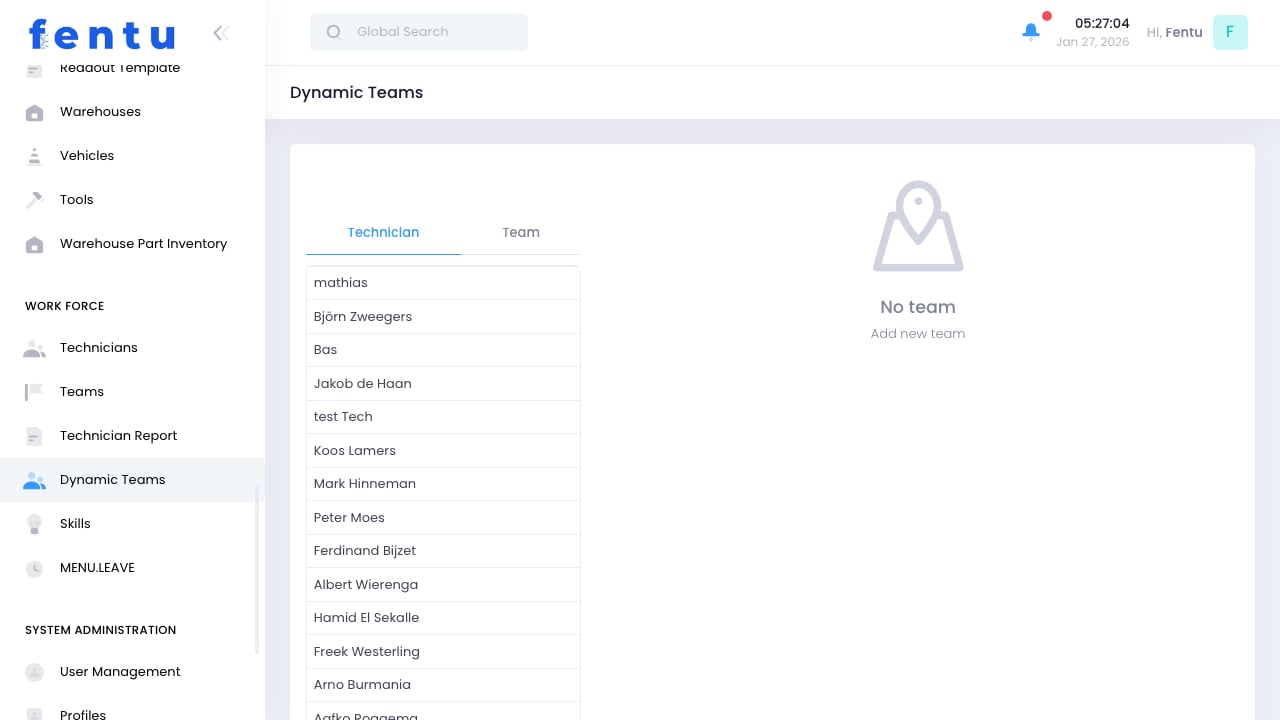
Dynamic Teams automatically determine membership based on rules and criteria you define. Unlike static teams where you manually add members, dynamic teams automatically include technicians who match specified conditions.Dynamic teams are powerful for creating groups that automatically update as technician attributes change. When a technician gains a new skill or changes location, they’re automatically included or excluded from relevant dynamic teams.
When to Use Dynamic Teams
Create dynamic teams for:- Skill-Based Groups - All technicians with specific certifications
- Location-Based Groups - Technicians within a geographic area
- Availability Groups - Technicians currently on duty
- Experience-Based Groups - Senior technicians or apprentices
- Combined Criteria - Complex conditions using multiple attributes
Dynamic Team Information
Each dynamic team includes:Rule Components
Rules can be based on:Creating Dynamic Teams
1
Navigate to Dynamic Teams
Go to Workforce > Dynamic Teams
2
Click Create
Start a new dynamic team
3
Enter Team Details
Provide name and description
4
Define Rules
Create rules that determine membership
5
Set Rule Logic
Choose AND/OR combinations for multiple rules
6
Preview Members
Review who currently matches the rules
7
Save Team
Activate the dynamic team
Building Rules
1
Select Attribute
Choose what to evaluate (skill, location, etc.)
2
Choose Operator
Select comparison type (equals, contains, greater than)
3
Set Value
Define the value to match
4
Add More Rules
Optionally add additional conditions
5
Set Logic
Choose whether ALL rules must match (AND) or ANY rule (OR)
Rule Logic
AND Logic
ALL conditions must be true:OR Logic
ANY condition can be true:Combined Logic
Complex rules combine AND and OR:Start with simple rules and add complexity as needed. Complex rules are harder to troubleshoot when membership doesn’t match expectations.
Dynamic Team Examples
Certification-Based Team
Emergency Response Team- Has certification “Emergency Response”
- Certification is not expired
- Status is Active
Skill-Level Team
Senior Technicians- Start date before 2020
- Has skill level “Expert” in at least one skill
- Status is Active
Geographic Team
Downtown Coverage- Home address within 10 miles of downtown office
- OR Assigned to Downtown branch
Combined Team
Machine Emergency Response- Has skill “Machine”
- Has certification “EPA 608” (not expired)
- Currently on duty
- Status is Active
Managing Dynamic Teams
Monitoring Membership
Dynamic teams update automatically, but you should:- Periodically review current membership
- Check that expected technicians are included
- Verify no one is incorrectly excluded
- Adjust rules if results don’t match intent
Troubleshooting
When membership isn’t as expected:- Check technician attributes match rule criteria
- Verify rule logic (AND vs OR)
- Look for typos in rule values
- Check if attributes have been updated
- Review certification expiration dates
Rule Maintenance
Keep rules current:- Update when skill names change
- Adjust geographic boundaries as territory changes
- Modify certification requirements as regulations change
- Remove obsolete criteria
Best Practices
Clear Naming
Clear Naming
Name dynamic teams descriptively. The name should indicate what criteria defines membership.
Document Rules
Document Rules
Add descriptions explaining why rules are configured as they are. Future administrators will thank you.
Start Simple
Start Simple
Begin with straightforward rules. Add complexity only when needed.
Regular Audits
Regular Audits
Periodically review dynamic team membership. Ensure rules still align with business needs.
Test Changes
Test Changes
Preview membership changes before saving rule modifications. Unexpected changes can affect dispatch.
Combine with Static
Combine with Static
Use dynamic teams for automatic membership and static teams for manual overrides when needed.
Common Questions
How often do dynamic teams update?
How often do dynamic teams update?
Dynamic team membership is evaluated when needed (e.g., at dispatch time). Changes to technician attributes are reflected immediately.
Can I manually add someone to a dynamic team?
Can I manually add someone to a dynamic team?
No, dynamic team membership is automatic. If you need to include someone who doesn’t match rules, adjust the rules or use a static team.
What if a technician matches multiple dynamic teams?
What if a technician matches multiple dynamic teams?
A technician can be in multiple dynamic teams simultaneously if they match the criteria for each.
How do I exclude specific technicians?
How do I exclude specific technicians?
Add exclusion rules (e.g., “Employee ID is not 12345”) or use a static team for direct control.
Can I base rules on work order history?
Can I base rules on work order history?
Rules are typically based on technician attributes, not history. For history-based assignment, use dispatch rules instead.
What happens if rules match zero technicians?
What happens if rules match zero technicians?
The team will have no members. Work assigned to an empty dynamic team cannot be dispatched until someone matches.
Related Documentation
Teams
Static team management
Skills
Skill definitions
Technicians
Technician attributes
Dispatcher
Dispatch and assignment